Compliance
Every improvement needed to preserve regulatory reliability and auditability.
PSQR, traceability platform
Regulated B2B workflow UX
Research-driven UX improvements for complex traceability workflows where precision and usability had to coexist.

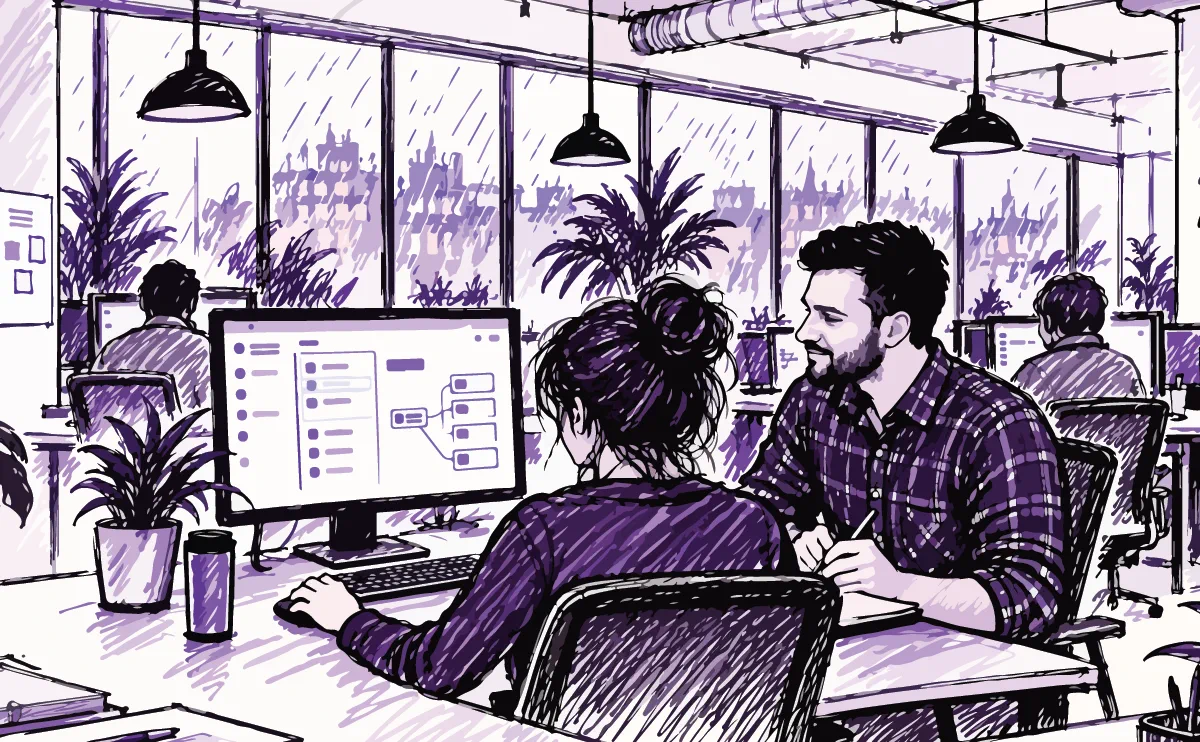
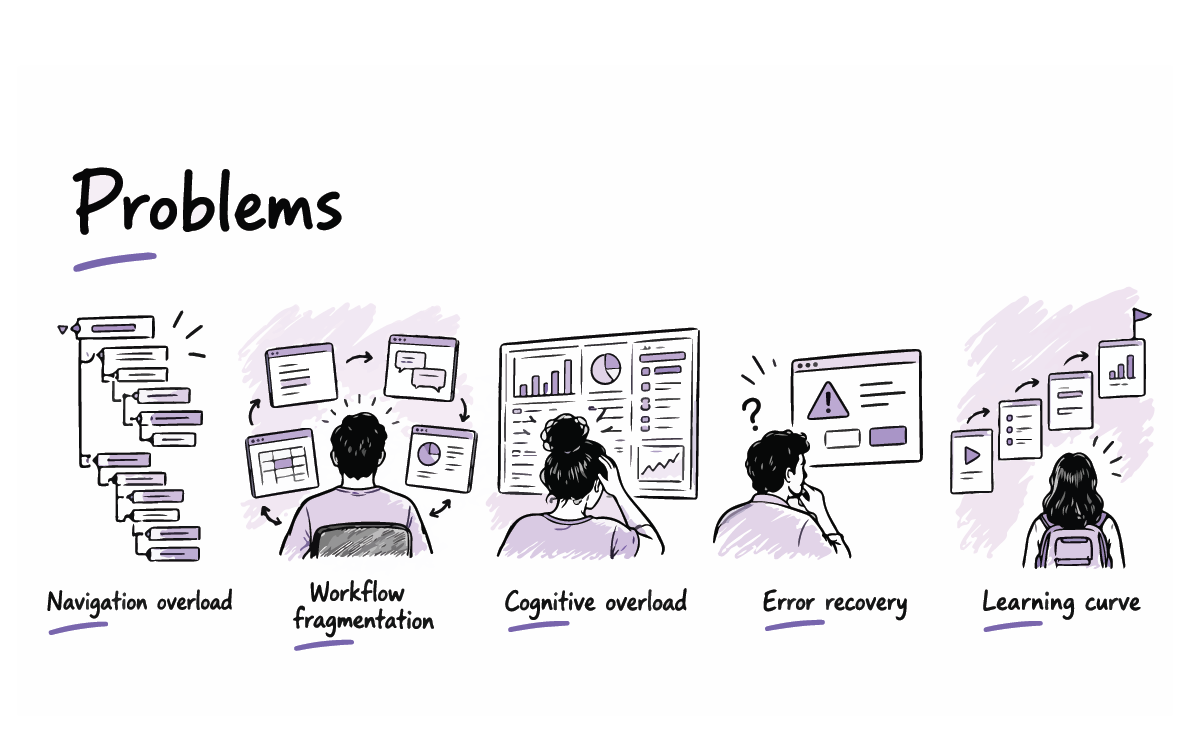
Traceability teams worked through dense, procedural workflows where errors carried real operational cost. The platform supported the required capability, while overloaded screens, deep navigation, and fragmented task flows placed too much cognitive demand on users.
Research followed complete tasks, including context switching, comprehension, and recovery from errors. The resulting recommendations clarified recurring workflows while preserving the precision and reliability expected in a regulated environment.
"The challenge was not simply making the interface easier to use. The challenge was helping users navigate operational complexity without compromising regulatory precision."
Traceability platforms operate in environments where workflows are procedural, mistakes are costly, and users need to maintain compliance while completing complex tasks. The PSQR platform already supported important capabilities, but users encountered overloaded screens, deep navigation, fragmented flows, and high cognitive load.
The goal became clear: reduce operational friction without reducing system capability.
The first phase focused on where users struggled, why friction occurred, and how real workflows behaved under pressure. Instead of treating each screen as a separate artifact, the research followed task continuity, context switching, error recovery, and the moments where users lost confidence.
Small interface problems could create delays, training dependency, or operational interruptions. That made behavioral observation more valuable than surface-level preference feedback.
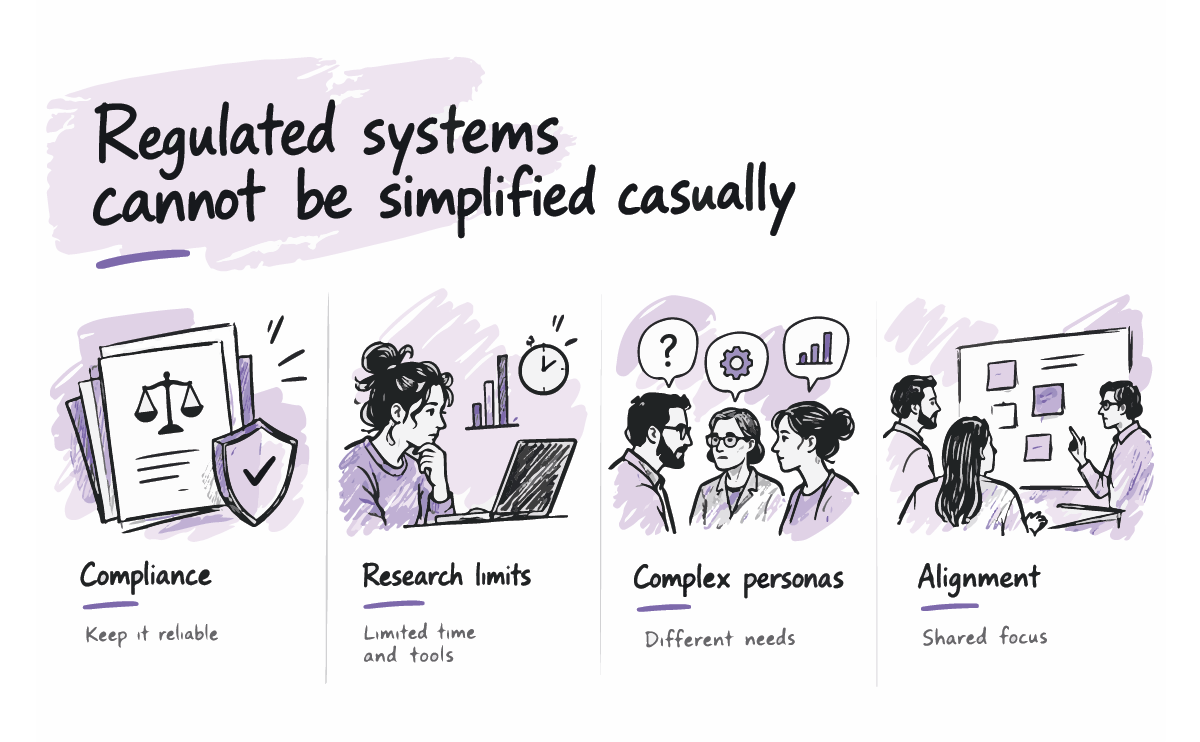
Every improvement needed to preserve regulatory reliability and auditability.
Budget and tooling constrained the scale of testing and synthesis.
Users varied in technical confidence, responsibility, and workflow frequency.
Stakeholders needed shared understanding of priorities and testing goals.
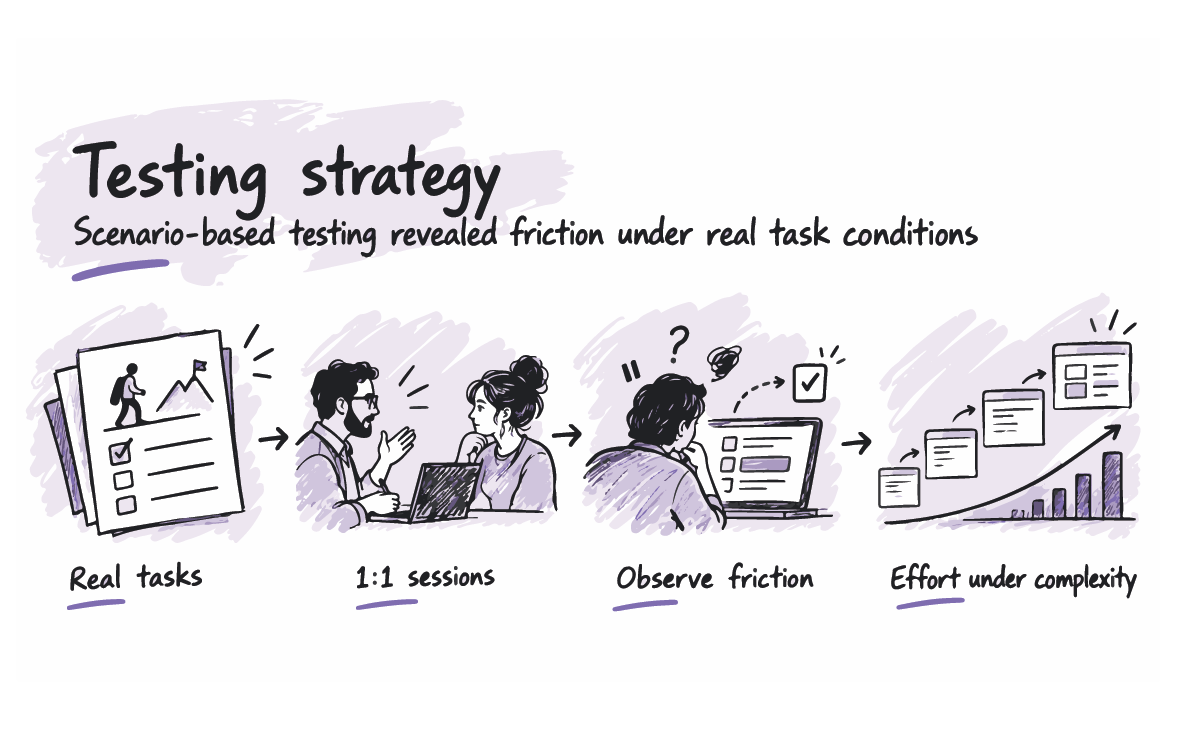
The sessions were built around realistic operational scenarios rather than generic usability exercises. We developed workflow-based tasks, moderated one-on-one sessions, and observation frameworks that captured friction, hesitation, confusion, and recovery behavior.
The question was not only whether users could finish a task. It was how much effort the system demanded when complexity increased.
I worked as the product designer responsible for UX research, moderated usability testing, workflow analysis, task flow optimization, interface restructuring, and stakeholder alignment. I translated research findings into prioritized product improvements and helped teams understand which issues carried the strongest operational impact.
Stakeholder sense-making connected research evidence to decisions the product team could act on.
Observed behavior was clustered into friction themes, mapped against operational impact, and converted into prioritized product recommendations.The project resulted in clearer workflows, reduced operational friction, faster task completion, and stronger user confidence. Users reported lower cognitive effort, easier navigation, fewer interruptions, and better understanding of system behavior.
Most importantly, the improvements preserved the platform's regulatory and operational capabilities while making the experience more approachable.
This project reinforced that enterprise UX is rarely about simplification alone. In regulated environments, complexity cannot always be removed, but it can be structured, guided, and clarified.
This project was completed for a traceability software company operating in a regulated environment. Specific workflows, metrics, visuals, and operational details have been generalized or anonymized due to confidentiality agreements.